


Table of Contents
- What Does Sustainable Luxury in Furniture Mean?
- Key Criteria for Sustainable Luxury Furniture
- Comparison: Conventional vs. Sustainable Luxury Furniture
- Sustainable Materials in High-End Interior Design
- From Concept to One-of-a-Kind Furniture: How Schwanekamp Interior Works
- Which Projects Are Sustainable Luxury Furniture Suitable For?
- Why Schwanekamp Interior Is the Right Partner
Sustainable luxury furniture combines uncompromising aesthetics with responsible resource use. Discerning private clients, architects and project developers increasingly face the question: how can genuinely premium interiors be combined with ecological and social standards? This article explains which criteria truly matter, how different approaches compare, and the role that specialist manufacturers such as Schwanekamp Interior can play.
What Does Sustainable Luxury in Furniture Mean?
Sustainable luxury furniture is not an “eco compromise”, but exceptionally high-quality interior pieces that are responsibly designed, manufactured and used throughout their entire life cycle. It is defined by the combination of:
- durability and repairability rather than rapid replacement cycles
- considered material selection, with certified raw materials and careful processing
- resource-efficient processes in planning, production and logistics
- timeless design that outlasts trends instead of merely serving them briefly
Today, luxury increasingly means clarity, quality and restraint rather than excess. Natural colours, organic forms and smart-home functions converge in interiors that feel technically advanced while remaining calm and pared back.
Key Criteria for Sustainable Luxury Furniture
1. Materials: Origin, Certification and Finishing
Fine woods remain at the heart of many luxury furniture pieces. They are only sustainable when sourced from responsibly managed forests. Certifications such as FSC indicate that ecological and social standards have been considered. High-performance ceramics, glass, metal surfaces and innovative composite materials are also becoming increasingly relevant when produced in a resource-conscious way and finished with low emissions.
2. Craft Quality and Service Life
A decisive sustainability lever in the premium segment is service life. Furniture that performs and remains aesthetically relevant for decades – or generations – offsets its environmental footprint far more effectively than mass-produced serial goods. Precise workmanship, structural stability and the ability to refurbish surfaces, for example by sanding or refinishing, are essential quality features.
3. Depth of Planning and a Holistic Approach
Sustainable luxury furniture is not created from a catalogue, but through a holistic planning process. This includes:
- a detailed needs analysis covering use, indoor climate, light and acoustics
- functional integration of storage, technology and smart-home systems
- a single-source value chain: planning, manufacture, installation and service
Specialist manufacturers such as Schwanekamp Interior combine these levels within continuous project management – a fundamental difference from industrial standard solutions.
Comparison: Conventional vs. Sustainable Luxury Furniture
| Aspect | Conventional Luxury Furniture | Sustainable Luxury Furniture, e.g. Schwanekamp Interior |
|---|---|---|
| Material origin | Often opaque, with the focus on appearance | Traceable origin, responsibly managed forests, selected suppliers |
| Service life | High-quality, but rarely designed consistently for decades | Long-term use, refurbishment and adaptation are planned for |
| Customisation | Limited variants, modular configuration | Fully bespoke solutions tailored to the space and its users |
| Planning process | Product-focused, with limited integrated consultancy | Intensive consultation, 3D visualisation, potentially VR, value engineering |
| Resource use | Serial-production logic, potentially higher offcuts | Optimised cutting, targeted material use, high level of in-house production |
| Service | Limited to delivery and assembly | Holistic support from concept through installation and aftercare |
Sustainable Materials in High-End Interior Design
Fine Woods and Natural Materials
Wood remains a key material thanks to its tactile appeal, warmth and capacity to store CO₂. Premium interiors use selected fine woods whose origin and drying are carefully controlled. Natural stone, high-quality ceramics and mineral-based materials complement them, creating robust and low-maintenance surfaces for kitchens, bathrooms and high-traffic areas.
Glass, Metals and Surface Finishing
Glass and metal surfaces enable a clear, contemporary design language, from structured safety glass to finely finished metal accents. Low-emission processing with durable, repairable coatings is decisive. This makes it possible to combine retro elements with modern, clean lines – a trend that characterises premium interiors.
Innovative Composites and High-Tech Solutions
Lightweight composite materials offer stability at reduced weight, an advantage in yacht interiors and in large-format wall and ceiling solutions. Combined with smart-home technology, they enable furniture to integrate lighting, climate control, audio and visuals without additional equipment leaving visible traces.
From Concept to One-of-a-Kind Furniture: How Schwanekamp Interior Works
Based in Vreden-Lünten, Schwanekamp Interior has combined traditional craftsmanship with modern interior-design technology since 1905. The route to sustainable luxury furniture follows five steps:
- Concept development – In an initial, non-binding meeting, goals, style, functions, schedule and budget are defined. These form the basis for the first room and furniture concepts.
- Project management – A dedicated contact guides the project from planning to installation, coordinates all trades and ensures schedule and cost certainty.
- Visualisation – Detailed drawings, 3D models and, if desired, VR presentations make the outcome tangible before production begins.
- Production – In-house specialists combine precision machinery with the finest craftsmanship. Different trades, from joinery and finishing to electrical integration, work closely together.
- Installation – On-site installation is carried out by the teams that made the furniture. This ensures maximum precision and sensitive handling of premium materials.
For architects and interior designers, this means a reliable, technically accomplished manufacturing partner that reviews, optimises and realises designs to uncompromising quality standards.
Which Projects Are Sustainable Luxury Furniture Suitable For?
Sustainable luxury furniture adds particular value to projects designed for long-term, intensive use:
- Private living spaces: kitchens, bathrooms, living rooms and bedrooms, libraries and home cinemas
- Representative business spaces: reception areas, conference rooms, exclusive offices and corporate interiors
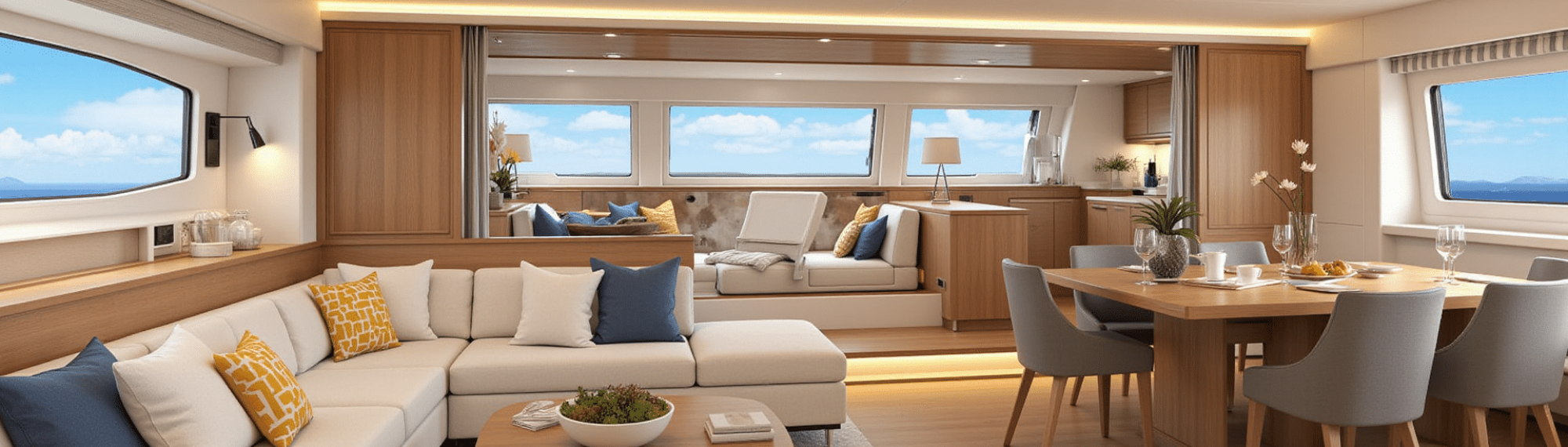
- Yacht interiors: bespoke solutions for maritime conditions, where weight, climate exposure and safety place special demands on materials and construction
In these contexts especially, the “all from one source” approach proves its value – from concept development and material selection through 3D visualisation to precise installation worldwide.
Why Schwanekamp Interior Is a Strong Partner for Sustainable Luxury Furniture
In every project, Schwanekamp Interior brings together core values: tradition and craftsmanship, holistic service, premium materials, innovation and technology, customer focus, reliability, exclusivity and responsibility. As part of the MOprojects Group, clients benefit from an international network and state-of-the-art manufacturing resources while retaining the character of a specialist manufacturer.
If you are planning sustainable luxury furniture for a private project, a demanding property or a yacht, Schwanekamp Interior delivers a bespoke, durable and aesthetically coherent result – from the first idea to final installation.
Arrange an appointment with an interior specialist today.
Telephone: +49 (0) 2564 9373 800
Email: service@schwanekamp.net
Contact form: https://schwanekamp-interior.com/kontakt/
Opening hours: Monday–Thursday 08:00–15:30, Friday 08:00–14:30, Saturday & Sunday closed.