


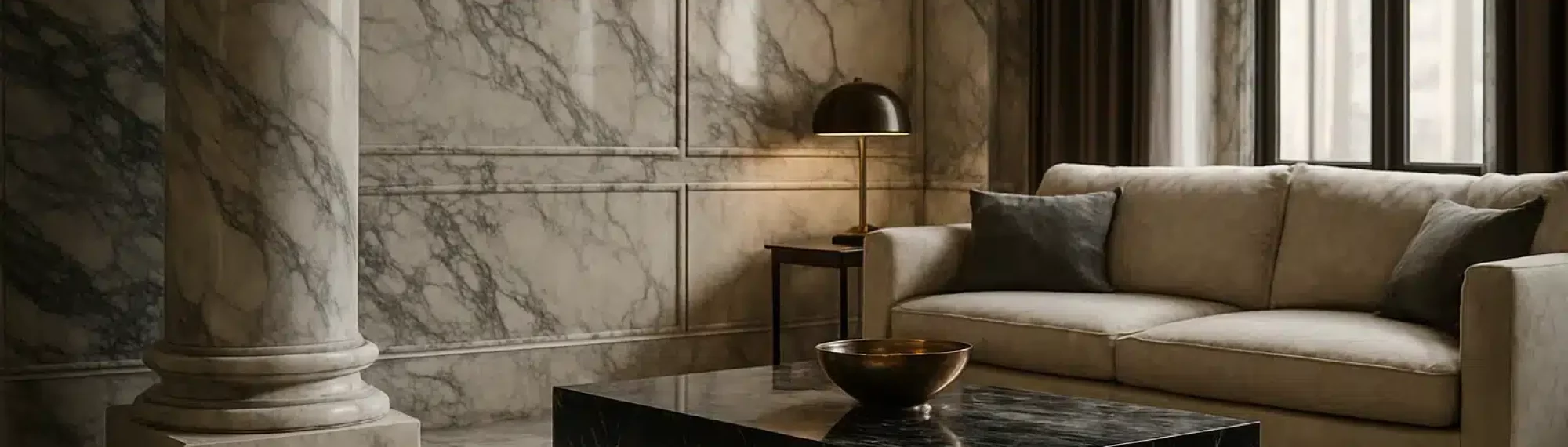
Akoestiek in de woonruimte: de basis voor rustige, hoogwaardige interieurs
Perfecte woonakoestiek ontstaat niet toevallig. Zij is het resultaat van de wisselwerking tussen architectuur, materialen en doelgericht geplande akoestische elementen. In dit artikel vindt u een gestructureerd overzicht van de basisprincipes, veelvoorkomende problemen in moderne interieurs en praktische oplossingen—van eenvoudige ingrepen tot maatwerk op high-endniveau.
Inhoudsopgave
- Waarom is akoestiek in de woonruimte tegenwoordig zo belangrijk?
- Basisprincipes: hoe ontstaat goed of slecht geluid in een ruimte?
- Typische akoestische problemen in moderne woonruimtes
- Welke akoestische oplossingen zijn er voor de woonruimte?
- Planning: integreer akoestiek vroegtijdig in het interieurontwerp
- Hoe Schwanekamp Interior akoestiek en design verbindt
- Volgende stap: maak gebruik van professioneel advies
Ga direct naar de contactgegevens
Waarom is akoestiek in de woonruimte tegenwoordig zo belangrijk?
Contemporary architecture often uses expansive surfaces, generous glazing, concrete and smooth finishes. While this aesthetic is striking, it has one drawback: hard materials reflect sound. The result can be reverberation, reduced speech intelligibility and a constantly elevated noise level—often perceived unconsciously as a source of stress.
Good residential acoustics mean:
- more relaxed living and working from home
- a pleasant atmosphere for conversation in living and dining areas
- better sound quality for music, streaming and home cinema
- greater privacy through reduced sound transmission between rooms
Basisprincipes: hoe ontstaat goed of slecht geluid in een ruimte?
Reflection, absorption and diffusion—the three key controls
Residential acoustics are fundamentally based on three physical mechanisms:
- Reflection: sound bounces off hard surfaces such as concrete, glass and tiles. Too many reflections cause reverberation and a cold-sounding room.
- Absorption: soft, porous materials such as textiles and acoustic panels absorb sound energy and shorten reverberation time.
- Diffusion: structured surfaces scatter sound. The soundscape remains lively without becoming acoustically dead.
The art of residential acoustics is to balance these three elements to suit the room’s use—from a lively dining space to a focused home office.
Reverberation time as a quality criterion
In living spaces, reverberation that is too short can feel unnatural, while reverberation that is too long is tiring. As a broad guide, a pleasant range is generally between 0.4 and 0.8 seconds, depending on room size and use. In practice, the target is adjusted through the considered selection of materials and furnishings.
Typische akoestische problemen in moderne woonruimtes
Many premium interiors face similar challenges:
- Large open-plan layouts: kitchen, dining and living in one space with few sound-absorbing surfaces.
- Extensive glazing: panoramic windows, glass balustrades and expansive façades.
- Hard flooring: stone, large-format tiles, exposed screed or parquet without rugs.
- Minimalist furnishing: few curtains, shelves or textiles.
The result is that conversations seem to float around the room, children’s noise is amplified, video calls reverberate and high-quality audio systems sound less precise than expected. This is exactly where well-designed acoustic solutions make a difference.
Welke akoestische oplossingen zijn er voor de woonruimte?
Invisible versus visible acoustic elements
Acoustic solutions can be divided into two categories:
- Integrated, almost invisible solutions: acoustically effective ceilings, wall constructions behind panels and acoustically transparent fronts.
- Design-led accents: acoustic panels, acoustically optimised furniture and wall cladding with structure or texture.
In elevated interior design, acoustics should be considered part of the design concept—not a compromise.
A practical overview of typical measures
- Ceiling solutions: acoustic ceilings, suspended baffles and clad ceiling fields with sound-absorbing cores and refined finishes such as veneer, lacquer or fabric.
- Wall cladding: structured timber panels, slatted systems and grooved or micro-perforated surfaces with acoustic fleece.
- Furniture and built-ins: cabinet fronts, shelving and wall cladding with acoustic performance, without appearing as technical elements.
- Textile components: acoustically effective curtains, rugs and upholstered furniture as complementary, design-integrated elements.
Acoustics and material selection in the premium segment
In high-quality interiors, materials have a dual role: they define the visual effect and influence acoustics. Schwanekamp Interior works, for example, with:
- selected woods and veneers
- high-quality ceramics and natural stone
- glass in a range of finishes
- refined metal surfaces and special lacquers
- precisely coordinated composite materials
Combining hard, representative finishes with concealed absorption zones makes it possible to create luxurious, calm spaces without sacrificing design clarity.
Planning: integreer akoestiek vroegtijdig in het interieurontwerp
Why consider acoustics during concept development?
The earlier acoustic solutions are planned, the more elegantly they can be integrated. During the concept phase, layout, material palette and furnishings can be coordinated so that later emergency solutions on the wall are avoided.
A three-step approach is recommended:
- Analysis: record room geometry, usage requirements and existing surfaces.
- Concept: define where absorption, reflection and diffusion should be positioned.
- Integration: incorporate acoustic elements into ceiling, wall and furniture design.
Working with architects and interior designers
For architects, interior designers and premium property developers, acoustics are now an integral part of holistic planning. Bespoke solutions from one source—from concept and 3D visualisation to installation—provide certainty in planning and ensure that design ambition and function come together perfectly.
Hoe Schwanekamp Interior akoestiek en design verbindt
Schwanekamp Interior, based in Vreden-Lünten, has combined German craftsmanship with modern interior-design technology since 1905. The company develops bespoke living concepts for discerning private clients, architects and businesses, with acoustics considered from the outset.
Key characteristics include:
- a holistic service from initial consultation and project management to installation
- in-house production with specialist teams for wood, metal, lacquer, electrics and more
- material expertise spanning fine woods, ceramics and glass through to exclusive surface finishes
- precise visualisation using 3D and, where desired, VR representations of your rooms
This creates acoustic solutions that blend seamlessly into luxurious kitchens, living and sleeping areas, libraries or home cinemas—always aligned with your individual style and technical requirements.
Volgende stap: maak gebruik van professioneel advies
High-quality residential acoustics are an essential quality feature of contemporary interiors. With a considered combination of absorption, reflection and diffusion, intelligently selected materials and early planning, calm and elegant rooms can be created in which design standards and everyday usability complement each other perfectly.
If you would like to elevate your rooms acoustically and aesthetically, Schwanekamp Interior is an experienced partner from the first idea through to flawless installation.
Arrange an appointment with an interior specialist today.
- Telephone: +49 (0) 2564 9373 800
- Email: service@schwanekamp.net
- Contact form: https://schwanekamp-interior.com/kontakt/
- Address: Wesker 40, 48691 Vreden, Germany
Opening hours
- Monday–Thursday: 08:00–15:30
- Friday: 08:00–14:30
- Saturday, Sunday: closed